
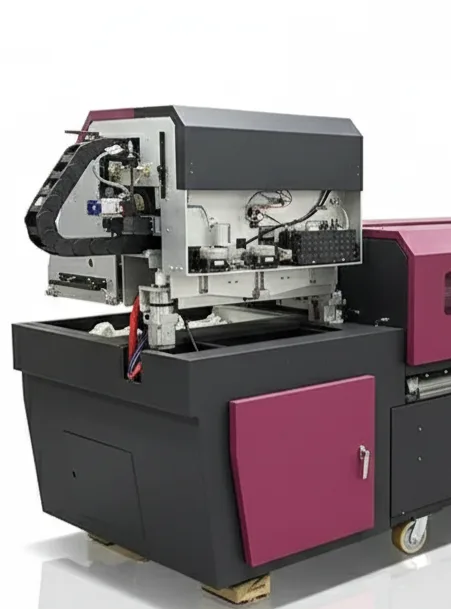
Ceramic Printer T2150-10 | Extra-Wide Digital Ceramic Printing Machine & Large Format Printer
Resources
Watch videos or download catalogues
Product Description
Ceramic Printer T2150-10 | Extra-Wide Digital Ceramic Printing Machine & Large Format Printer
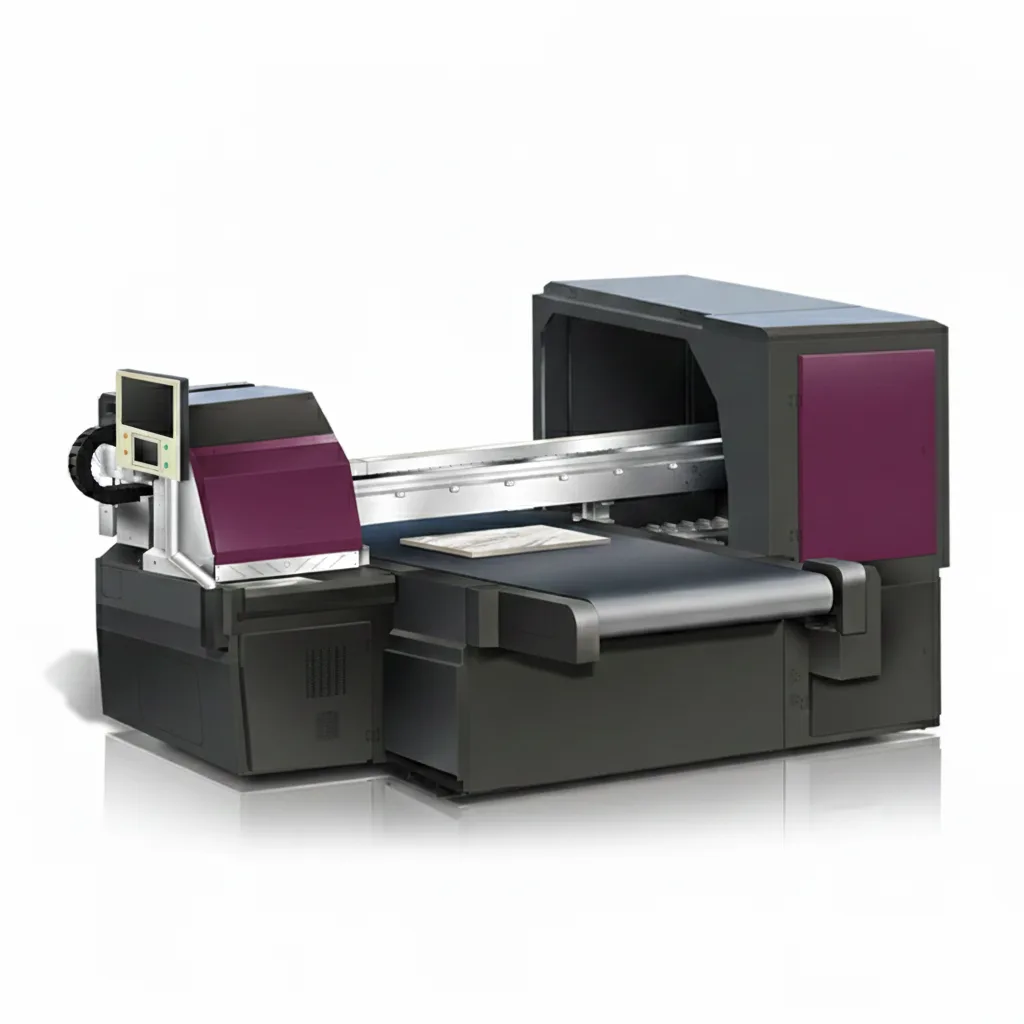
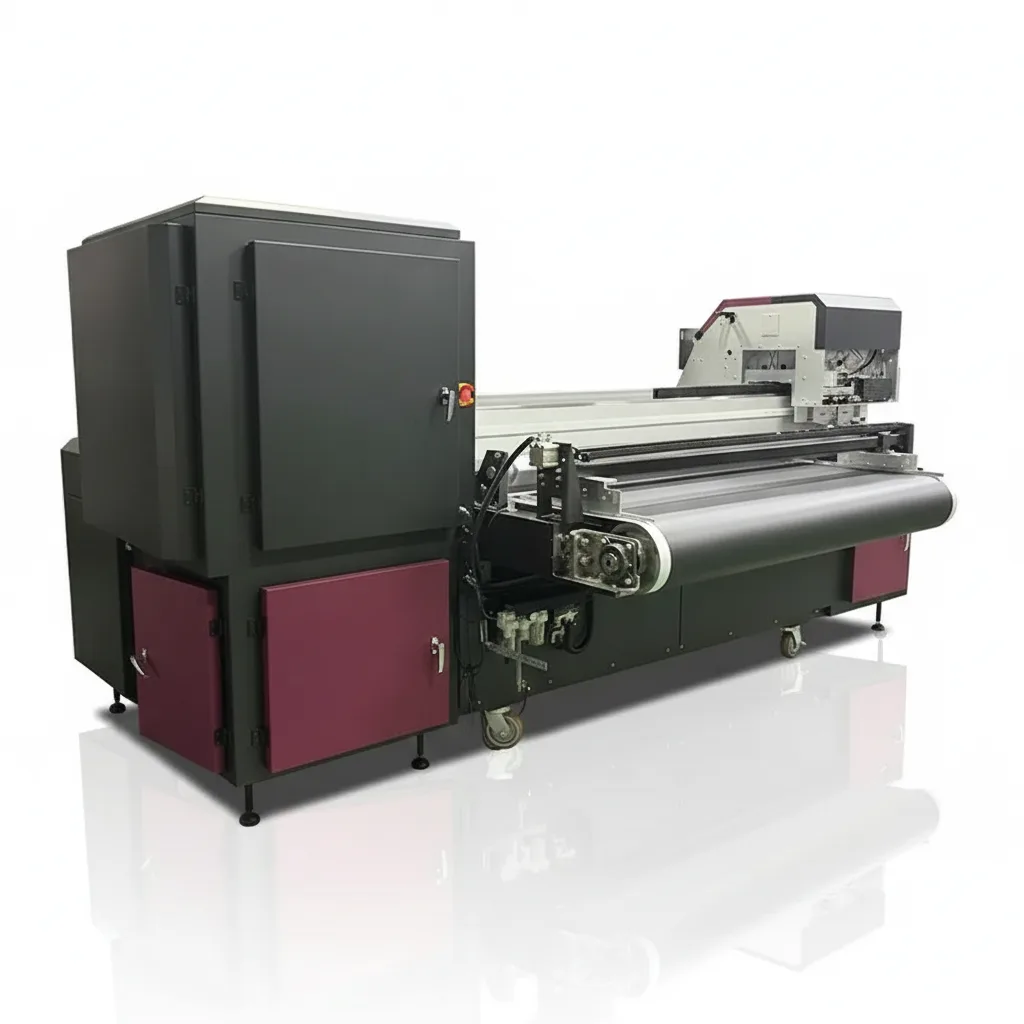
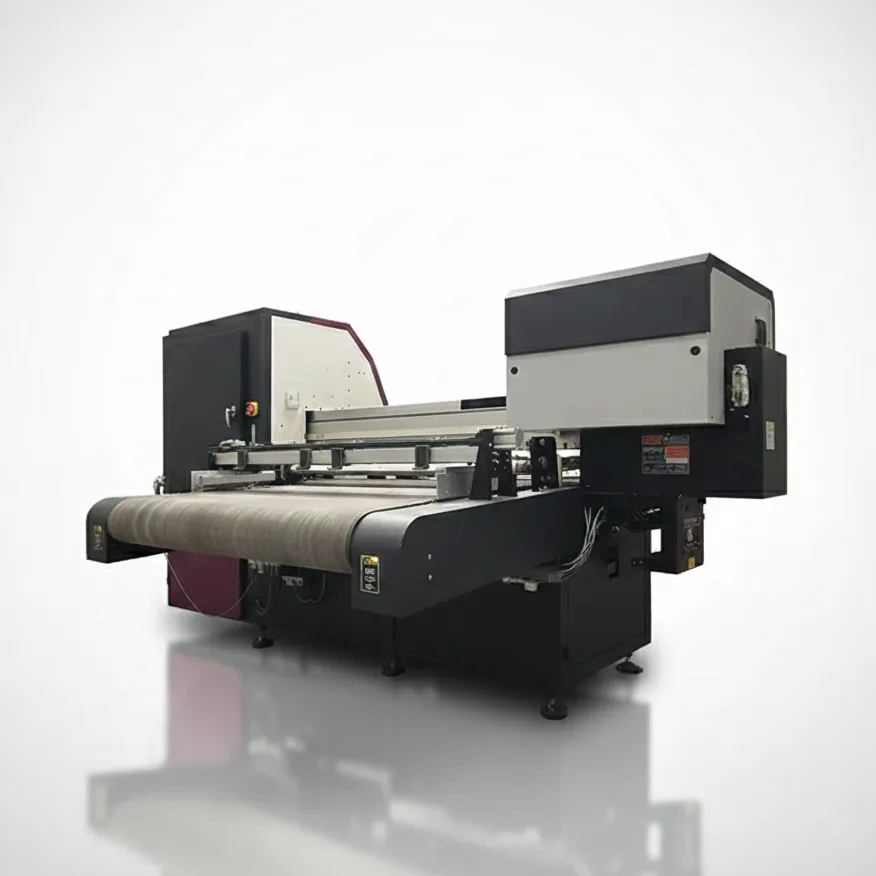
The Ceramic Printer T2150-10 is an extra-wide ceramic printing machine built for factories that print the largest tiles and slabs in the market. With a 2100mm printing width, 10 ink channels, and SEIKO RC1536 printheads, this ceramic printer handles tiles that are simply too wide for 740mm, 1170mm, or even 1320mm machines — including 2000mm big slabs, extra-wide floor panels, and continuous ceramic surfaces that demand a true large format printer. As the widest single-stage ceramic printing machine before stepping up to the full 30-channel KT2100 glaze line, the T2150-10 gives factories the width they need without the complexity and cost of a multi-stage system.
For a small printing business that has grown into serious ceramic production, or a sign shop running flex printing and flex printing machines that is ready to move into high-margin large-format ceramic tile production, the T2150-10 opens up a completely different market segment — big slab tiles, architectural panels, and wide-format interior surfaces that command premium pricing. It uses the same proven SEIKO RC1536 recirculation printheads, adjustable drop size from 14~98pl (up to 13~133pl), 360 DPI native resolution, and 37 kHz firing frequency as the rest of the T-series platform. With 10 channels supporting CMYK plus extended colours and special effects, print on demand custom slabs, and continuous factory runs, the T2150-10 is focused digital printing equipment that does one thing exceptionally well — print very wide tiles reliably, at speed, day after day. Available in two widths — T1320-10 (1320mm) for standard large tiles and T2150-10 (2100mm) for extra-wide and big slab production.
Key Advantages of Ceramic Printer T2150-10
✔ 2100mm Extra-Wide Printing
A 2100mm print width handles the biggest tiles and slabs on the market — 2000mm big slabs, extra-wide floor panels, and continuous ceramic surfaces — in a single pass. For a ceramic printer serving the premium large-format segment, this width is the entry point.
✔ SEIKO RC1536 Recirculation Printheads
SEIKO RC1536 industrial printheads with recirculation keep heavy ceramic pigments from settling during long production runs. At 2100mm width, consistent ink flow across the full printhead span is critical — and this head design delivers it.
✔ 10-Colour Channel Configuration
10 ink channels support CMYK plus extended colours or special-effect inks. For a ceramic printing machine focused on width and throughput rather than maximum channel complexity, 10 channels provide the right balance for most big slab production.
✔ Adjustable Drop Size 14~133pl
Drop size from 14~98pl (expandable to 13~133pl) gives operators control over fine detail on marble and wood effects, smooth gradients, and heavy ink coverage for dark big slab designs and glaze-effect inks.
✔ 37 kHz Firing & 360 DPI
37 kHz firing frequency with 360 DPI native resolution keeps ceramic printing fast enough for continuous factory lines even at 2100mm width — no quality sacrifice on large-format tiles that customers inspect closely.
✔ Print-on-Demand for Big Slabs
Digital workflow enables custom big slab tiles, short sample runs, and print on demand wide-format designs without screens. For a small printing business entering the premium slab market, this removes the screen-printing barrier entirely.
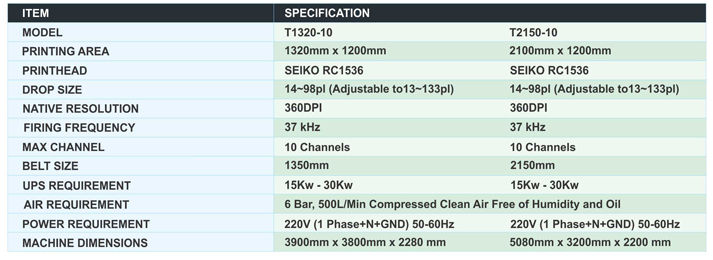
Ceramic Printer T2150 / T1320 Technical Specifications
| ITEM | T2150 - 10 | T1320 - 10 |
|---|---|---|
| Model | T2150 - 10 | T1320 - 10 |
| Printing Area | 2100mm × 1200mm | 1320mm × 1200mm |
| Belt Size | 2200mm | 1340mm |
| Printhead | SEIKO RC1536 | SEIKO RC1536 |
| Drop Size | 14~98pl (Adjustable to 13~133pl) | 14~98pl (Adjustable to 13~133pl) |
| Native Resolution | 360 DPI | 360 DPI |
| Firing Frequency | 37 kHz | 37 kHz |
| Max. Channels | 10 Channels | 10 Channels |
| UPS Requirement | 20 kW – 35 kW | 15 kW – 30 kW |
| Air Requirement | 6 Bar, 500 L/Min Compressed Clean Air (Free of Humidity and Oil) | 6 Bar, 500 L/Min Compressed Clean Air (Free of Humidity and Oil) |
| Power Requirement | 380V (3 Phase + Neutral + Ground) 50–60Hz | 380V (3 Phase + Neutral + Ground) 50–60Hz |
| Technology | Digital Ceramic Inkjet Printing System | |
| Applications | Big Slab Ceramic Tile Printing, Extra-Wide Floor & Wall Panels, Architectural Ceramic Surfaces, Print on Demand Custom Tiles, Industrial Ceramic Decoration, Wide Format & Large Format Ceramic Production | |
*Printing area, belt size, and UPS requirement vary by model (T2150-10 / T1320-10); all other specifications are shared across both models. Specifications as per product datasheet.
Ceramic Printer T2150-10 Common Applications
| Application | Description |
|---|---|
| 🏠 Decorative Wall & Floor Tiles | Extra-wide digital decoration for residential and commercial wall and floor tiles up to 2100mm width |
| 🏢 Architectural Ceramic Panels | Large format ceramic panels for building facades, lobbies, and commercial interiors at full slab width |
| 🎨 Customized Ceramic Designs | Print on demand custom patterns, artwork, and personalised big slab designs without screens |
| 🏪 Brand Logos & Promotional Products | Corporate branding on wide ceramic surfaces for retail spaces, restaurants, and hospitality venues |
| ☕ Ceramic Mugs & Tableware | Custom printing on ceramic drinkware and dining products (with appropriate fixturing) |
| 🖼️ Photo & Artwork Printing | High-resolution reproduction of photographs and fine art on large-format ceramic substrates |
| 🛁 Bathroom & Interior Décor | Custom bathroom tiles, shower surrounds, and wide-format interior decorative ceramic surfaces |
| 🏭 Industrial Ceramic Decoration | Continuous single-pass production for large tile and big slab manufacturing plants |
| Big Slab Ceramic Tiles | Extra-wide floor slabs, wall slabs, and oversized decorative panels up to 2100mm — the primary use case for the T2150-10 |
| Digital Print Expansion | For businesses moving from flex printing, flex printing machines, or vinyl print workflows into extra-wide ceramic production |
Ceramic Printer T2150-10 FAQ
Step 1 — Ink Preparation: Ceramic inks containing glass frits, metal oxides, and mineral pigments are loaded into the ceramic printing machine. These inks are heavier and more abrasive than solvent inks used in flex printing machines. The T2150-10 uses SEIKO RC1536 printheads with recirculation that keeps pigments suspended and flowing evenly across the full 2100mm width.
Step 2 — Digital Printing: The big slab or tile is placed on the 2200mm conveyor belt. As it passes under the printheads, the ceramic printer jets the design using variable drop sizes (14~133pl) at 360 DPI and 37 kHz. With 10 channels, the T2150-10 applies CMYK plus effects in a single pass.
Step 3 — Drying: The printed slab may pass through a drying section to remove moisture carriers from the ink before kiln entry.
Step 4 — Kiln Firing: This is the step that separates ceramic printing from all other digital printing. The printed tile enters a kiln at 800–1200°C. The glass frits melt and fuse with the tile surface, and the metal oxides develop their final permanent colours. The design becomes part of the tile itself — scratch-resistant, water-resistant, UV-stable, and chemically bonded.
Step 5 — Quality Check & Packing: The finished big slab or tile is inspected and shipped.
Unlike flex printing where the print is finished off the machine, ceramic printing is only complete after kiln firing. And unlike a ceramic 3D printer that builds shapes from clay, a ceramic printer decorates flat surfaces of already-formed tiles and slabs.