


Textile Printer F1780 | Flatbed Textile Printing Machine for Small Business
Resources
Watch videos or download catalogues
Product Description
Textile Printer F1780 | Flatbed Textile Printing Machine for Small Business
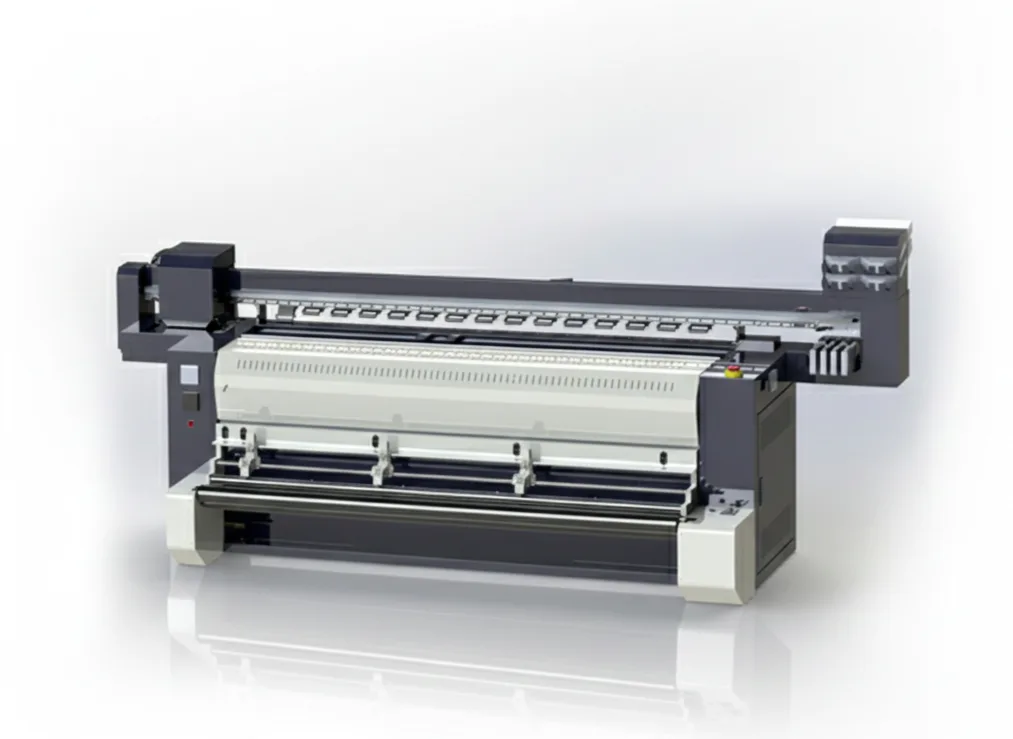
The Textile Printer F1780 is a wide-format flatbed printer built for businesses that print directly on fabric — cotton, polyester, linen, silk, blends, and more — without the messy setup, screens, and chemical waste that come with traditional methods. As a modern Textile Printer, it uses industrial SPT508GS 12PL printheads (with EPSON 5113 available as an option) to jet pigment, reactive, acid, or disperse inks directly onto rolled fabric at widths up to 1780mm. For a best printer for small business looking to move away from a screen printing machine or add digital fabric printing alongside existing services, the F1780 delivers professional textile output in a footprint that fits a typical production shop.
What makes the F1780 practical for growing operations is its combination of width and simplicity. A 1780mm print area handles fabric widths that cover most garment, home textile, and soft signage applications. The direct-to-fabric workflow means no pre-treatment coating for many ink-fabric combinations, no transfer paper, and no post-printing washing for pigment inks on cotton — print it, heat-set it, and it is done. As a flatbed printer with roll-to-roll feeding, it handles both cut-piece printing for garment factories and continuous roll printing for home textiles and soft signage. For businesses comparing a digital Textile Printer against upgrading or adding another screen printing machine, the F1780 offers shorter setup times, lower minimum order sizes, and the ability to print full-colour photographic designs that screens simply cannot match.
Key Advantages of Textile Printer F1780
✔ SPT508GS 12PL Printheads
Industrial SPT508GS 12PL printheads (EPSON 5113 optional) deliver consistent jetting and reliable output for daily Textile Printer production on a wide range of fabric types.
✔ 1780mm Wide Fabric Printing
A 1780mm print width handles standard fabric roll widths used in garment manufacturing, home textiles, and soft signage — making this flatbed printer versatile enough for multiple textile markets.
✔ Multi-Ink Compatibility
Supports pigment, reactive, acid, and disperse inks — so one Textile Printer can serve cotton, polyester, silk, linen, and blended fabrics depending on the ink you load.
✔ Direct-to-Fabric Workflow
Print directly onto fabric — no transfer paper needed for most applications. For pigment inks on cotton, the process is print and heat-set with no washing required, making this Textile Printer far simpler than traditional methods.
✔ Roll-to-Roll Feeding System
Roll-to-roll feeding with take-up system supports continuous production on long fabric rolls. For a flatbed printer serving garment factories, this keeps longer print runs moving without manual handling.
✔ Simple Operation & Low Waste
Digital workflow means no screens to make, no setup waste between jobs, and no minimum order size. For the best printer for small business textile production, this dramatically reduces costs on short runs.
Textile Printer F1780 Technical Specifications
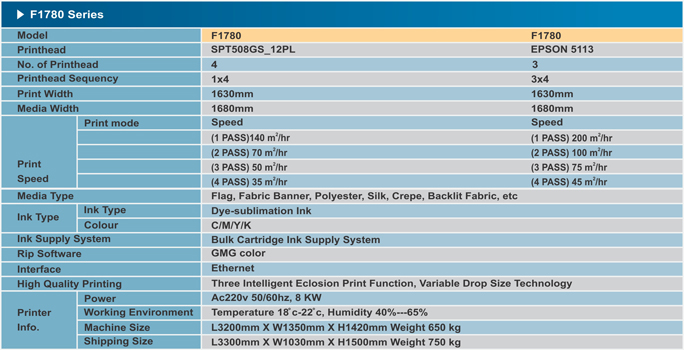
| ITEM | F1780 (SPT508GS_12PL) | F1780 (EPSON 5113) |
|---|---|---|
| Model | F1780 | F1780 |
| Printhead | SPT508GS_12PL | EPSON 5113 |
| Print Width | 1780mm | 1780mm |
| Media Width | 1800mm | 1800mm |
| Media Type | Cotton, Polyester, Linen, Silk, Blended Fabrics, Sublimation Transfer Paper | |
| Ink Type | Pigment Ink / Reactive Ink / Acid Ink / Disperse Ink / Sublimation Ink | |
| Ink Supply System | Bulk Auto Ink Supply System | |
| RIP Software | Maintop / PhotoPrint | |
| Interface | USB 2.0 / Network | |
| Heating System | Front Heater, Rear Heater, Drying Fans | |
| Feeding System | Roll-to-Roll Feeding with Take-Up System | |
| Power | AC220V 50/60Hz, 8kW | |
| Working Environment | Temperature 18°C – 22°C, Humidity 40% – 65% RH | |
| Machine Dimensions | 3300mm × 1350mm × 1420mm | |
| Machine Weight | 650 kg | |
| Applications | Garment Printing, Home Textiles, Soft Signage, Flag & Banner Printing, Cut-Piece Printing, Roll-to-Roll Fabric Printing, Sublimation Transfer Printing | |
Textile Printer F1780 Common Applications
| Application | Description |
|---|---|
| 👕 Garment Printing | T-shirts, hoodies, dresses, polo shirts, and cut-piece fabric printing for garment manufacturers |
| 🏠 Home Textiles | Bed sheets, curtain fabric, pillow covers, tablecloths, and upholstery fabric printing |
| 🚩 Flag & Banner Printing | Advertising flags, feather flags, promotional banners, and outdoor fabric signage |
| 🎨 Custom Fabric Designs | Print on demand custom patterns, all-over prints, and personalised fabric designs without screens |
| 🏭 Soft Signage | Fabric-based indoor and outdoor signage, light box backdrops, and retail display graphics |
| 👟 Sportswear Printing | Jerseys, sport shirts, leggings, and athletic wear with sublimation or pigment printing |
| 🎒 Bags & Accessories | Tote bags, canvas bags, backpacks, and fabric accessory printing |
| 🖥️ Sublimation Transfer | Sublimation transfer paper printing for polyester sportswear, mugs, and hard surfaces |
Textile Printer F1780 FAQ
Step 1 — Fabric Preparation: Depending on the ink-fabric combination, the fabric may be pre-treated with a coating solution to help the ink bond. For pigment ink on cotton with the F1780, many applications require minimal or no pre-treatment.
Step 2 — Digital Printing: The fabric is loaded onto the roll-to-roll system. As it passes under the industrial printheads, the Textile Printer jets the design directly onto the fabric surface using variable drop sizes at high resolution. The F1780's front and rear heaters help the ink bond with the fabric fibres during printing.
Step 3 — Drying: The printed fabric passes through the drying fans and heating system to remove moisture carriers from the ink.
Step 4 — Fixing: The fixing step depends on the ink type. For pigment ink on cotton, a heat press or calendar at 150–180°C for 30–60 seconds is typically all that is needed — no washing required. For reactive ink, the fabric is steamed and then washed. For disperse/sublimation ink on polyester, heat pressing at 200–230°C transfers and fixes the colour. This flatbed printer approach is far simpler than a screen printing machine workflow, where each colour requires a separate screen, manual registration, and cleanup.
Step 5 — Cutting & Finishing: The printed fabric is cut, sewn, or finished into the final product — garments, home textiles, flags, or soft signage.